Websites3 min read
Is Your Manufacturing Website Losing Leads?
A website should do more than prove your factory exists. It should help buyers decide to contact you. Ten fixes, plus a checklist you can run today.

Sagar MamureMechanical engineer turned marketer · Founder, Marketing Mantra
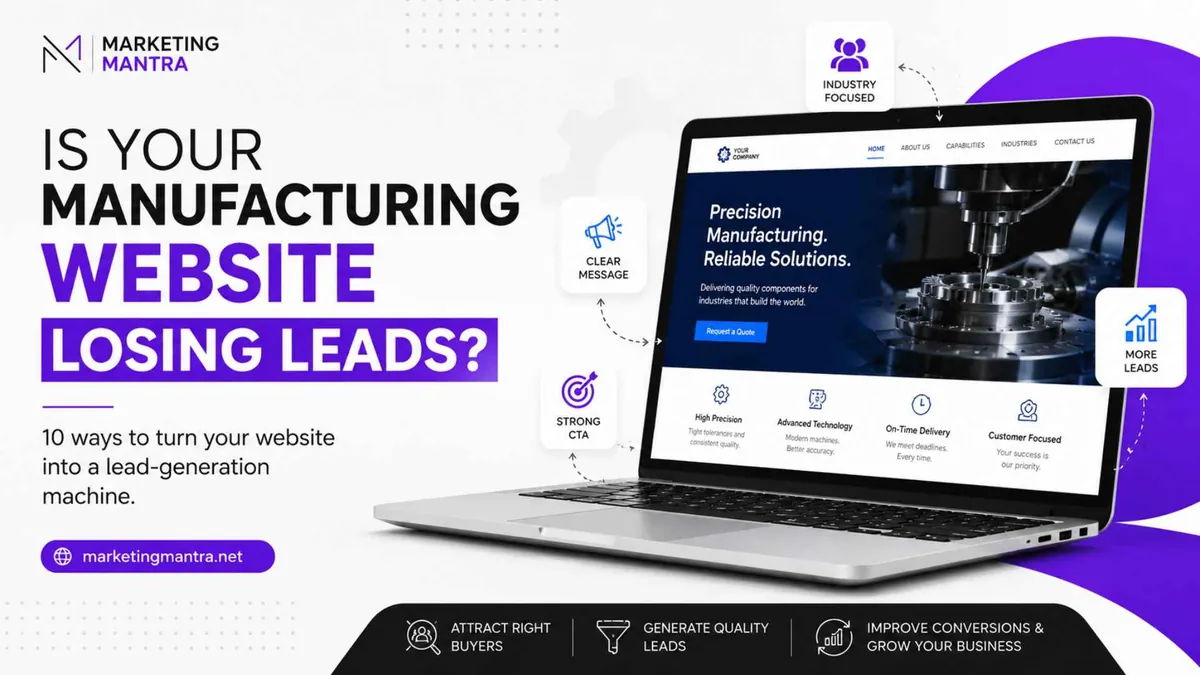
A website should do more than prove that your factory exists. It should help buyers decide to contact you.
Many manufacturing companies with good products, experienced teams and competitive pricing still lose potential customers because their website does not communicate well. For B2B manufacturers, the website is often the first serious interaction with a buyer.
The real question is not whether you have a website, but whether it helps buyers take action.
Does your website clearly explain what you manufacture?
Visitors need immediate answers: What do you make? Who is it for? What problem do you solve?
“Innovative engineering solutions”
“Precision CNC-machined components for automotive and industrial OEMs”
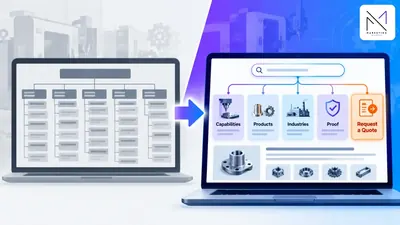
Do you have dedicated product and service pages?
Give each major product, process or service its own page.
CNC machining, sheet metal fabrication, laser cutting and injection moulding each deserve a page. This helps visitors find what they need and helps search engines understand what you offer.
Do you show the industries you serve?
Buyers look for relevance.
Industry sections or pages for sectors such as automotive, pharmaceutical or food processing show that you understand their requirements, provided you genuinely have that experience.
Do you show proof, not just claims?
Every company claims quality. Back it up.
Case studies
Shared with the client’s permission.
Testimonials and logos
Only with written approval.
Certifications
ISO, IATF or AS9100 where held.
Capability and machinery
Machine lists, production capacity and real project photographs.
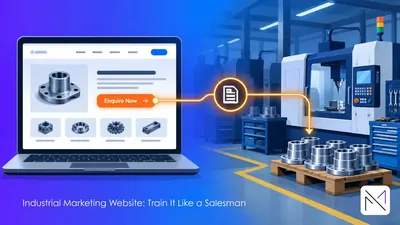
Is it easy to contact you?
Use specific, action-oriented calls to action, and place them where buyers need them.
- “Request a Quote”
- “Send Your Drawing”
- “Talk to an Engineer”
- “Download the Catalogue”
Not only on the Contact page: on every product and capability page.
Is technical information hidden inside PDFs?
Put specifications, materials, applications and FAQs on the page as searchable text, and offer the PDF as an extra.
Information locked in a PDF is easier to miss, for buyers and search engines alike.
Does your website work on mobile?
Test it on a phone: readability, speed, navigation, forms, buttons and images.
Many buyers open your link from WhatsApp or LinkedIn on mobile first.
Is your content built around search intent?
Write for the searches buyers actually make.
Our guide to the keywords your buyers actually type explains how to find them.
Do you measure what happens after visitors arrive?
Track form submissions, quote requests, calls, downloads, conversion rates and lead sources, not just traffic.
Traffic without enquiries tells you very little.
Do buyers have a reason and a route to act?
Guide visitors through a logical path, with an obvious next step on every page.
Run the manufacturing website checklist
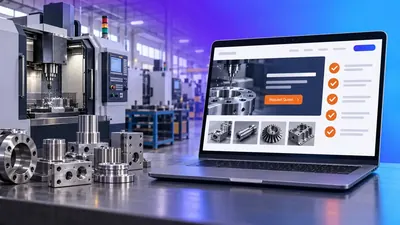
Tick everything that is true for your website today:
Manufacturing website checklist
10 of 10 unticked. Your website is probably losing leads. A free audit will show you which gaps matter most.
Summary
- A manufacturing website is part of your sales process, not just a digital brochure.
- Say clearly what you make, give each product and industry a page, and show proof.
- Make it easy to act from every page, and track what happens after visitors arrive.
- Build a website that helps buyers buy, not one that only helps your company look presentable.
Frequently asked questions
How often should a manufacturing website be updated?
There is no fixed rule, but product information, capabilities, contact details, case studies and technical information should always be current.
Should manufacturers invest in SEO?
Yes, especially when customers actively search for your products or services. SEO builds long-term visibility, though it takes time and results are never guaranteed.
Should a manufacturing website show prices?
It depends on your business model. For customised B2B products, it is often better to encourage quotation requests and explain what affects price.
Is social media enough without a website?
No. Social media creates visibility, but your website is where buyers evaluate your company in depth.
Sagar Mamure is the Founder and CEO of Marketing Mantra, a Pune-based marketing, sales and branding consultancy for manufacturing SMEs. A mechanical engineer turned marketer, he helps factories turn their websites and LinkedIn into steady sources of RFQs. Connect on LinkedIn.