Websites6 min read
Why Most Manufacturing Websites Fail (And Owners Don’t Even Know It)
“Bhai, website toh hai, lekin leads hi nahi aate.” Why most manufacturing websites quietly fail, and what to fix first.

Sagar MamureMechanical engineer turned marketer · Founder, Marketing Mantra
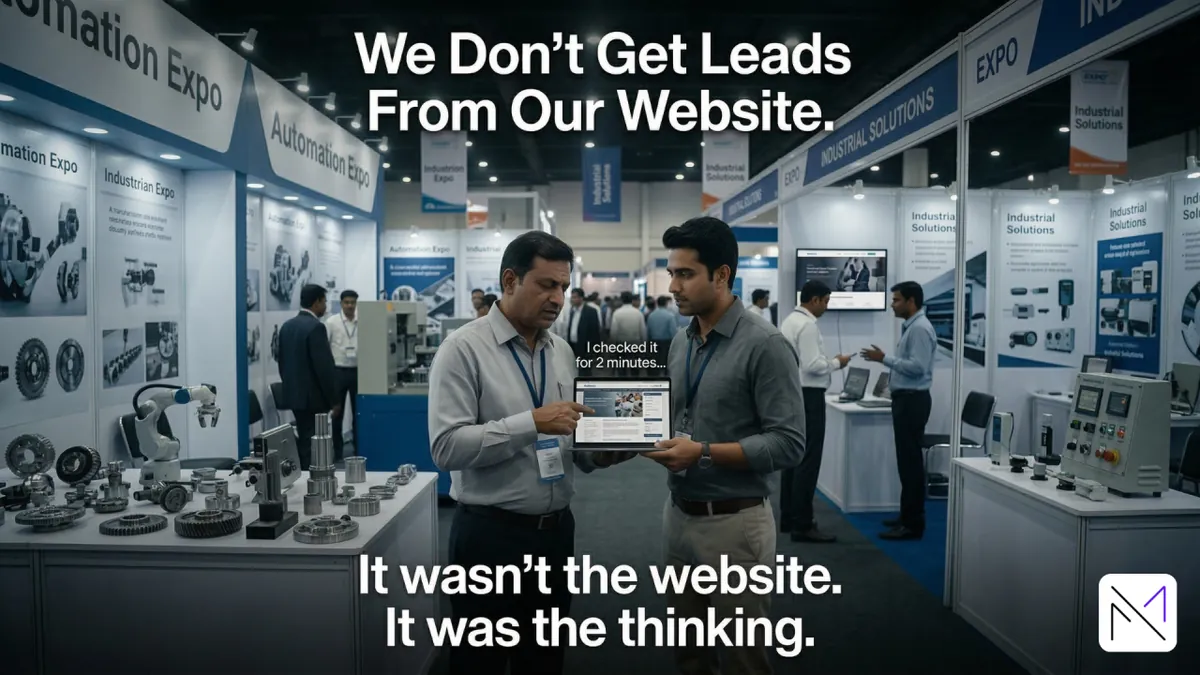
A trade event in Pune
Last month, a manufacturing business owner walked up to me at a trade event in Pune. 20+ years in business. Strong offline network. Solid production capacity.
He pulled out his phone, opened his website, and said:
“Bhai, website toh hai hamare paas, lekin leads hi nahi aate.”
I looked at it. And I didn't know what to say.
The trailer
His website had a homepage slider from 2015 with blurry factory images.
An About Us page that said, “We are a leading manufacturer of quality products since 2005.” A contact form that probably hadn't worked in years.
No specifications, no case studies, no clear message. Nothing a buyer could use.
- No product specifications
- No case studies
- No clear messaging
- No trust signals
- No SEO
- No mobile optimisation
Nothing that a potential buyer, sitting in Germany or even in Surat, would find remotely useful. And yet, he was spending ₹3–4 lakhs on trade shows. But his website? “Woh toh ek baar banwa liya tha. Kaam chal raha hai.”
Here's the part that should bother you: he is not the exception. He is the rule.
The conflict nobody talks about
Indian manufacturers are some of the hardest-working, technically skilled, operationally sharp people in the business world.
They can tell you the tensile strength of every grade of steel they stock. They know their rejection rates down to 0.2%. They negotiate freight costs like seasoned traders.
Ask about bounce rate
Blank stare.
Ask who the website is written for
“Sab ke liye.”
Ask when it was last updated
“Pata nahi, agency ne banaya tha.”
This is the conflict: a technically sophisticated industry running on a digitally broken foundation. And the worst part? They are losing business that they don't even know exists.
The buyer in Ahmedabad
Searched “custom sheet metal fabrication B2B India” and found your competitor. Not because your competitor is better, but because their website told a clearer story.
The HR head in Bangalore
Looking to place a quality engineer. She landed on your site, couldn't figure out what you make, and closed the tab in 8 seconds.
The procurement manager from a German Tier-1
Wanted to shortlist Indian vendors. Your website looked so outdated, he assumed your operations were too.
You never even knew these people came and left.
The real story behind the broken website
The owner calls a nephew, a local agency or a ₹15,000 freelancer, and the brief is vague.
“Achha sa website banana hai, company ka.”
The whole brief.
A WordPress theme gets picked
Stock photos of factories get uploaded.
Copy and paste
The company profile comes straight from an old brochure.
The logo colour gets matched
The website goes live.
The owner sees it
Says “Theek hai.” Done.
Nobody asked:
- Who is coming to this website?
- What do they already know, and what do they need to find out?
- What action should they take after landing here?
- What makes this company different from the 400 other manufacturers in the same category?
- How does a buyer's decision journey actually work in this industry?
These questions were never asked because nobody in that room knew they needed to be asked.
What is a manufacturing website actually supposed to do?
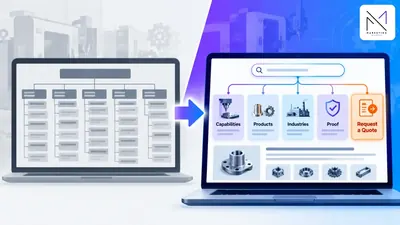
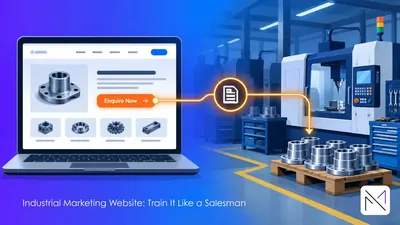
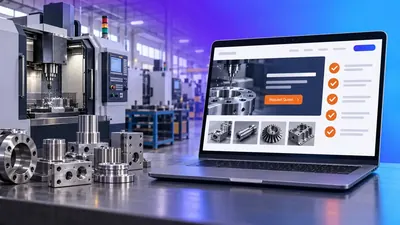
A manufacturing company's website is not a digital brochure.
It is a 24/7 sales executive who speaks to buyers in Munich, Mumbai and Mississippi simultaneously. It is your first impression on talent your competitor is trying to hire. It is the document a procurement head forwards to his team, saying, “Check these guys out.”
But for that to happen, three things need to work together, and almost no Indian manufacturer has all three:
A clear buyer persona and journey
A purchase manager at a Tier-2 auto ancillary is not a sourcing head at a pharma packaging company. Different pain points, requirements and trust signals. Generic “quality, trust, excellence” speaks to nobody.
UI/UX that doesn't make people leave
Walls of text, confusing navigation, no visual hierarchy, 12-field forms, pages that break on mobile, and CTAs buried at the bottom.
SEO and content that make you findable
Google ranks relevance, trust and content that answers what people search for. AI tools pull from clear, well-structured pages.
You wouldn't keep your factory floor disorganised and expect quality output. Why would you expect your website to convert when it's a digital mess?
When a procurement consultant asks ChatGPT for “reliable CNC machining manufacturers in Pune for automotive components”, the AI pulls information from websites with clear, well-structured, relevant content.
“We manufacture precision components with state-of-the-art machinery.” (and nothing else)
Clear pages that state what you make, the specifications, the industries you serve and where you are
Why does this keep happening?
After speaking with dozens of manufacturing owners, the real reasons are painfully consistent.
“Website se leads nahi aate.”
A self-fulfilling prophecy. A bad website doesn't generate leads, the owner concludes websites don't work, invests nothing, and the cycle continues.
“Itna kharcha nahi karna website pe.”
A ₹50 lakh machine: nobody blinks. A quality website that represents that machine to the world? “₹20 hajaar mein nahi hoga kya?” The ROI math is inverted.
“Agency ne bola tha achha banayenge.”
Many manufacturers were burned by agencies that promised the world, delivered a template and disappeared. One bad experience became a reason to underinvest forever.
“Humara kaam referral se hi aata hai.”
Today, yes. But referrals have a ceiling, and even referrals Google you before they call.
What is the invisible cost of a bad website?
You track machine downtime, raw material wastage and rejection rates. But nobody is tracking:
- How many buyers landed on your website and left without contacting you
- How many talented engineers looked you up and chose a competitor with a more professional digital presence
- How many Google searches your competitors win because their website has the content yours doesn't
- How many shortlists you missed simply because your website didn't look credible enough
In aggregate, across a year, this is your invisible revenue leak.
Before I leave you with this
Sit with a few questions. Tick the ones you can honestly answer “yes” to:
The front-door test
4 of 4 unticked. Your website is probably costing you business you never see. Start with a free audit.
The machines in your factory are world-class. Is the front door to your business?
Key takeaways
- Most manufacturing websites are built as brochures, not sales tools.
- Buyers, recruiters and overseas sourcing teams judge you by your website before they ever call.
- A working website needs a clear buyer persona, usable design and findable content.
- The cost of a bad website is invisible: the buyers and talent who left without a word.
Sagar Mamure is the Founder and CEO of Marketing Mantra, a Pune-based marketing, sales and branding consultancy for manufacturing SMEs. A mechanical engineer turned marketer, he helps factories turn their websites and LinkedIn into steady sources of RFQs. Connect on LinkedIn.
Originally published in the Marketing Mantra newsletter on LinkedIn.