Branding3 min read
Small Business Branding Starter Pack
Your logo is not your brand. A starter pack for small businesses that want a brand built on substance, not just design.

Sagar MamureMechanical engineer turned marketer · Founder, Marketing Mantra
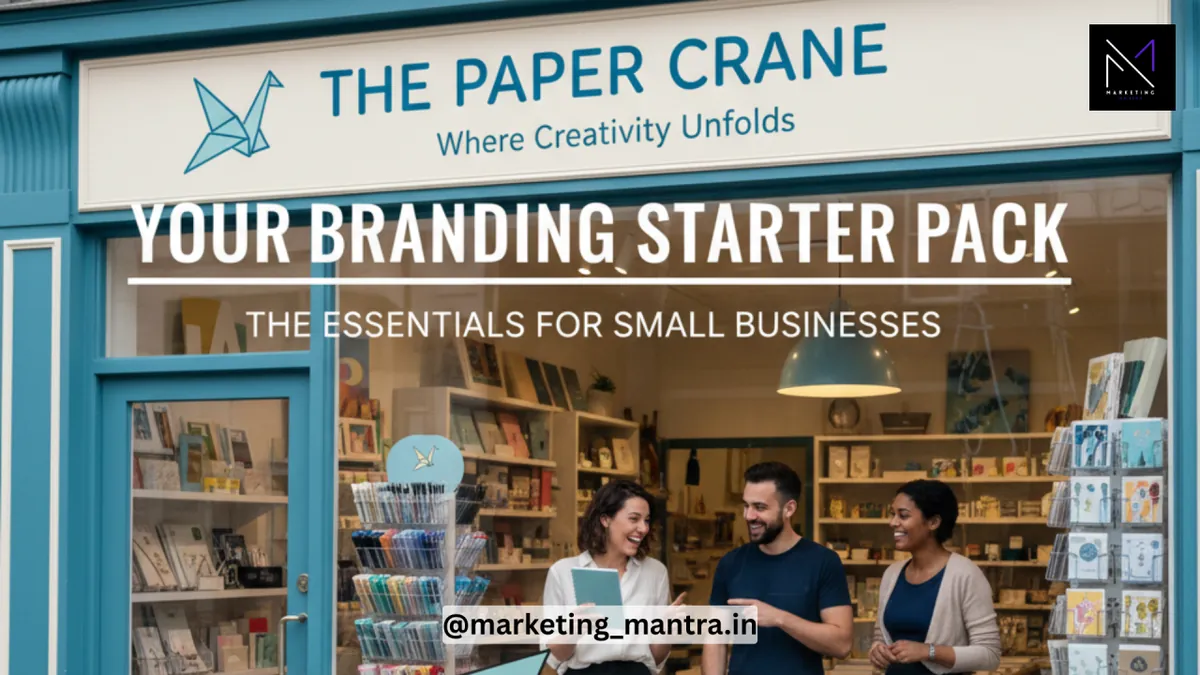
Let's get one thing straight: your logo is not your brand.
It's a symbol, not the substance. In a noisy market where everyone's shouting for attention, too many small businesses mistake good design for good branding. But a sleek logo won't fix a confused message, an inconsistent experience or a hollow mission.
A real brand isn't just what people see. It's what they feel when they interact with you: the trust you build, the promise you keep, and the emotion you leave behind.
If you want a brand that actually lasts, here's your real starter pack: the foundation you need before you ever think about a logo.
The brand core: know your “why”
Before picking colours or fonts, define your purpose. Your brand core is your North Star: it guides every decision, from hiring to headlines.
Mission: your “today”
What do you do, who do you serve, and how do you make their lives better?
Vision: your “one day”
Where are you going long term? What future are you trying to create?
Values: your “right now”
What principles shape your decisions every day?
If your values sound like everyone else's (“integrity”, “quality”, “innovation”), they're useless. Make them actionable.
“Sustainability”
“Build the best product, cause no unnecessary harm.” (Patagonia)
The landscape: know who you're talking to, and who you're not
A brand built for everyone resonates with no one. You need clarity on who you serve, what they care about, and where you stand in their world.
Your audience
Talk to real customers. Ask what frustrates them, what excites them and what they wish existed. Turn that into a customer persona: a clear picture of your ideal client that makes decisions easier.
Your competitors
Don't copy them; analyse them. Identify their gaps, their tone and their audience blind spots. Your opportunity lies where their strengths end and yours begin.
The message: define your promise and tell your story
This is where your brand stops being a concept and starts being communicable.
Unique value proposition
The logical statement: how do you solve a specific problem better than anyone else?
Brand story
The emotional connection: why do you exist, and what journey brought you here? The best brands make the customer the hero, with the brand as their trusted guide.
“We're great.”
“Here's how we help you win.”
The toolkit: build your visual and verbal identity
Now you're ready for the tangible stuff, the part everyone thinks branding starts with.
Name, logo and tagline
Keep it simple, distinctive and flexible. Your tagline should feel like your brand's handshake: short, confident and clear.
Colour and typography
Colours trigger emotions (blue = trust, red = urgency, green = nature). Fonts shape personality (serif = classic, sans-serif = modern). Limit yourself to two or three fonts. Discipline is design.
Voice and tone
Your voice is your brand's personality, consistent everywhere. Your tone flexes with context: friendly in emails, authoritative in thought pieces.
Visual style
Use photography, icons and design elements consistently. Everything should look and feel like it came from the same universe.
The golden rule: consistency builds trust
You can have the best visuals, messaging and values, but if you're inconsistent, you're invisible.
Every post, email, product and reply either deposits into or withdraws from your audience's trust bank.
Brands aren't built in a day. They're built in the small, consistent moments where your promise matches your delivery.
Starter pack check
5 of 5 unticked. Your brand foundation has gaps. Start with the brand core before touching the logo.
Bottom line
Building a brand is a marathon, not a sprint. Your logo might get attention, but your brand's foundation, purpose, message, voice and consistency, earns loyalty.
Start here. Build slowly. Stay consistent. The market will recognise authenticity faster than perfection.
Key takeaways
- Your logo is a symbol, not your brand.
- Start with the brand core: mission, vision and actionable values.
- Know your audience and competitors before you speak.
- Define your promise and story, then build the visual and verbal toolkit.
- Consistency is what turns a brand into trust.
Sagar Mamure is the Founder and CEO of Marketing Mantra, a Pune-based marketing, sales and branding consultancy for manufacturing SMEs. A mechanical engineer turned marketer, he helps factories turn their websites and LinkedIn into steady sources of RFQs. Connect on LinkedIn.
Originally published in the Marketing Mantra newsletter on LinkedIn.