LinkedIn4 min read
How Manufacturers Get Industrial Leads on LinkedIn: A 2026 Guide
Industrial buyers check your website, your founder’s profile and your LinkedIn page before they reply. Here is how to make LinkedIn work as a business-development channel.

Sagar MamureMechanical engineer turned marketer · Founder, Marketing Mantra
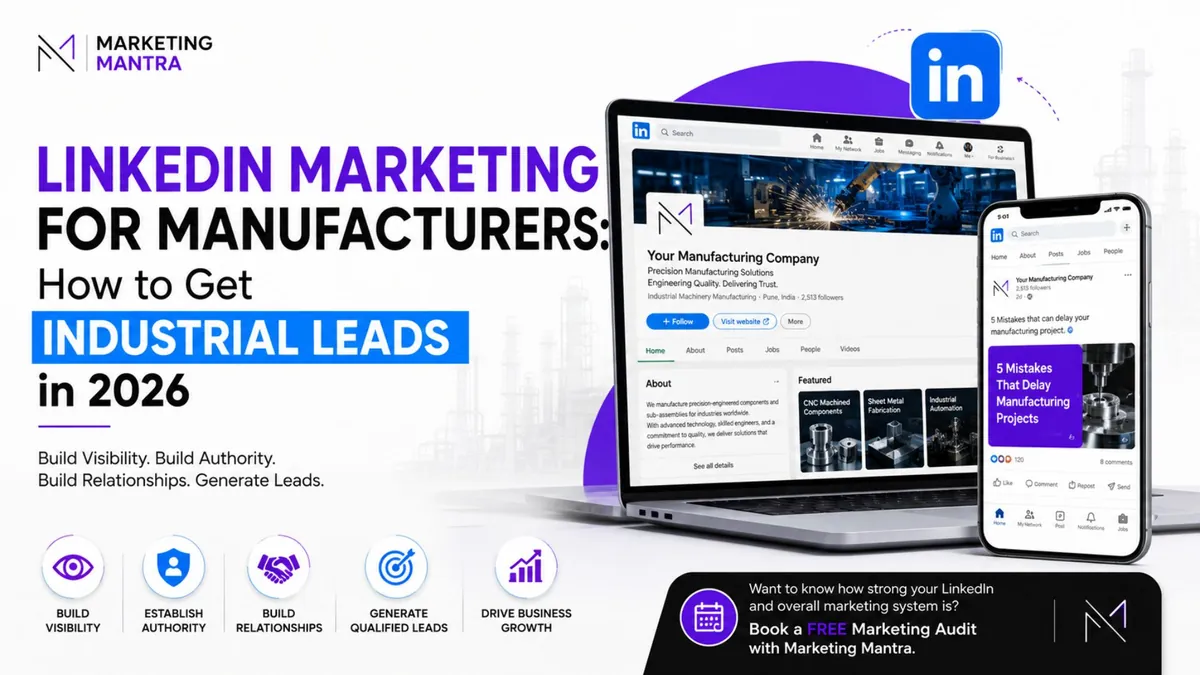
Before an industrial buyer replies to your message or takes your call, they usually look you up.
LinkedIn is part of how trust is formed before the first conversation, so it cannot be treated as a corporate brochure.
Why does LinkedIn matter to manufacturers?
Procurement heads, plant managers, directors, engineers and OEM decision-makers use LinkedIn professionally.
A visible, credible presence there helps buyers feel they already know you. A dormant page or an outdated profile quietly does the opposite.
How should you fix the founder profile?
A founder’s profile should answer three questions: who you help, what problems you solve, and why buyers should trust you.
- A professional photograph and a relevant banner
- A clear headline that names who you help
- A buyer-focused About section
- Featured content: guides, case studies, company profile
- Experience and contact details
- A link to an active company page
A profile written like a CV for recruiters
A profile that tells buyers who you help and why to trust you
What should the company page include?
The company page should explain your manufacturing capabilities, industries served, locations, certifications, projects and contact details.
Someone who finds it without speaking to your team should still come away with a credible picture of your business.
Why should you stop posting only products?
Product announcements rarely help a buyer decide. Content that addresses buyer problems does.
Five mistakes to avoid when selecting a fabrication partner
A buyer-problem post.
CNC machining versus conventional machining
When each makes sense.
How to choose the right material for a component
A technical guide.
What causes delays in industrial procurement
An insider view.
This positions you as knowledgeable, not just promotional.
How can founders use their experience?
Manufacturing founders have a real advantage: experience buyers value.
Share customer lessons, production challenges, industry observations, mistakes, technical insights, hiring lessons and supplier learnings. This makes the company more human and more credible.
Which content formats should you use?
Use a mix: text posts, carousels, short videos, simple infographics, polls, case studies shared with permission, and LinkedIn newsletters.
A simple weekly rhythm might look like this:
| Day | Content |
|---|---|
| Monday | Educational post |
| Wednesday | Founder story |
| Thursday | Carousel |
| Friday | Case study or project insight |
| Saturday | Industry observation |
Start with what you can sustain. Two good posts a week beat five rushed ones.
How much should you sell in your posts?
A useful rule of thumb is roughly 80% education and 20% promotion.
80%
education: useful posts that earn attention (a rule of thumb, not a statistic)
20%
promotion: posts that convert the attention you already have
Who should you connect with?
Prioritise relevance over follower count.
Connect with procurement managers, plant heads, directors, founders, engineers, OEM decision-makers and industrial consultants in your target industries.
How should outreach messages start?
Never with a sales pitch.
“Hello Sir, we are a leading manufacturer. Please give us an opportunity.”
Understand their role, engage with their content, offer something useful, then move to a business conversation.
Are LinkedIn newsletters worth it?
Yes. Newsletters give you a consistent home for longer writing.
Industry insights, technical guides, supplier selection advice, manufacturing trends and business lessons all work well as newsletter editions.
What should you measure?
Measure conversations and opportunities, not just likes.
Watch profile views, search appearances, followers and engagement, but measure what matters more: website clicks, messages, meetings, qualified leads, opportunities and, eventually, revenue.
Every interested contact should move into your CRM with an owner and a next step, as described in our manufacturing CRM guide.
What does a practical 90-day LinkedIn plan look like?
Fix the foundation, build authority, then start systematic business development.
Days 1 to 30: fix the foundation
Optimise the founder profile and company page, define your ideal customer profile, choose three or four content pillars, and start publishing twice a week.
Days 31 to 60: build authority
Publish three to four times a week if you can sustain it, introduce project stories and founder content, comment thoughtfully, and connect with your target roles.
Days 61 to 90: systematic business development
Offer a useful resource, begin personalised outreach, track where conversations come from, refine your content, and keep follow-up consistent.
LinkedIn foundation check
5 of 5 unticked. Your LinkedIn presence is not yet building trust. Start with days 1 to 30.
Frequently asked questions
Should the founder or the company page post more?
Ideally both. Founder-led content usually builds trust faster because people connect with people. The company page provides the credible reference point.
Is LinkedIn useful for small manufacturers?
Yes, particularly for B2B manufacturers who sell to decision-makers and technical professionals.
How often should manufacturers post?
Consistency matters more than volume. Two to four useful posts a week is a practical starting point.
Should manufacturers use LinkedIn ads?
Paid campaigns can help later, but profile positioning, useful content and a working follow-up process come first.
Sagar Mamure is the Founder and CEO of Marketing Mantra, a Pune-based marketing, sales and branding consultancy for manufacturing SMEs. A mechanical engineer turned marketer, he helps factories turn their websites and LinkedIn into steady sources of RFQs. Connect on LinkedIn.