Lead Generation3 min read
How Can Manufacturing Companies Generate Inbound Leads Online?
Your next customer may already be searching for what you manufacture. The question is whether they can find you, trust you and contact you easily.

Sagar MamureMechanical engineer turned marketer · Founder, Marketing Mantra
Your next customer may already be searching for what you manufacture. The question is whether they can find you.
Manufacturing companies have traditionally relied on referrals, trade exhibitions, distributors and cold calling. Those still work. Inbound marketing adds something different: a digital system that helps potential customers discover you at the moment they have a problem to solve.
What is inbound lead generation?
Inbound lead generation means attracting potential customers through useful information and digital visibility, instead of only reaching out to them.
An inbound lead, step by step
A buyer searches:
They find your website, review your capabilities and a case study, and send an enquiry. That is an inbound lead, and it arrives with intent already attached.
What are the ten steps for manufacturing companies?
Start with the right customer, then build visibility, capture every lead and follow up properly.
Start with the right customer
Define your ideal customer: industry, company size, location, job titles, applications, order size, technical requirements and buying triggers. A company trying to target everyone usually ends up with vague marketing.
Build a website that generates enquiries
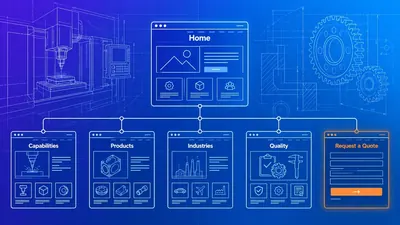
Organise it around customer questions, with pages for products, processes, industries, applications, case studies, FAQs and technical resources. Keep the enquiry route short.
Use SEO to capture existing demand
Target product, application, industry, location, problem and technical-question searches.
“custom stainless steel fabrication for food processing equipment” beats “fabrication company”
Create content around buyer problems
Material selection, process comparisons, production problems, maintenance, quality standards, specifications, applications and cost factors.
Use LinkedIn for business development
Share customer problems, project stories, technical insights and founder experience rather than catalogue posts.
Optimise your Google Business Profile
Correct details, services, photographs, posts and genuine reviews, consistent with your website.
Offer something useful
A checklist, selection guide, eBook, calculator or audit turns an anonymous visitor into an identifiable prospect.
Capture every lead
Name, company, requirement, source, owner, stage and next follow-up. This is where a CRM becomes essential.
Follow up properly
Every active lead needs a defined next action.
Measure the right numbers
Leads, qualified leads, source, cost per lead, conversion rate, meetings, quotations, orders and revenue.
One of the biggest problems is not a lack of leads. It is poor follow-up.
See our manufacturing CRM guide for how to set up capture and follow-up, and manufacturing website design for step two.
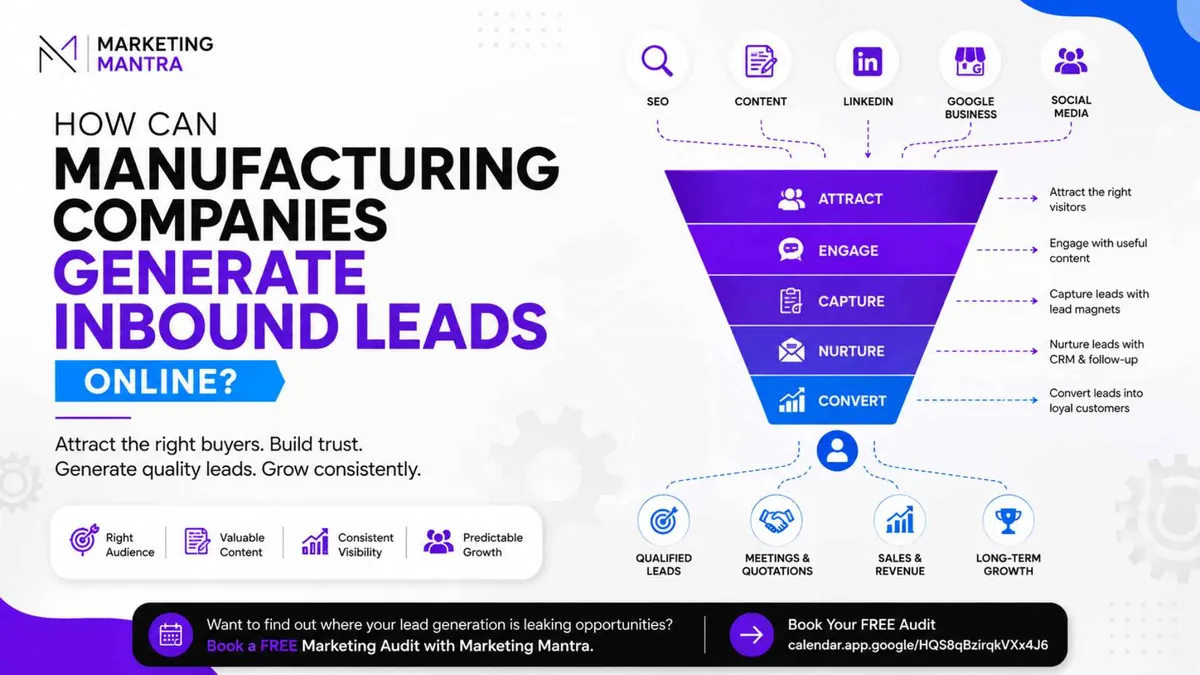
What does the inbound system look like end to end?
The channels differ by industry. The system matters more than any single platform.
Inbound readiness check
5 of 5 unticked. Parts of your inbound system are missing. Start with the ideal customer and the website.
Summary
- Inbound lead generation is a system, not one campaign.
- It needs the right audience, useful content, digital visibility, lead capture, a CRM and consistent follow-up.
- The goal is not to become famous online. It is to be discoverable, credible and easy to contact when the right buyer is ready.
Frequently asked questions
Is inbound marketing better than cold calling?
Not necessarily. It depends on the business. Many manufacturers do best with a combination of inbound and outbound.
How long does SEO take?
SEO is a long-term channel. Results depend on competition, website quality, content and the market you target, and rankings are never guaranteed.
Should manufacturers use paid advertising?
It can speed up visibility, but works best once your website, offer, tracking and sales process are already in good shape.
How many leads does a manufacturing company need?
There is no universal number. What matters is qualified opportunities and revenue, not raw lead volume.
Sagar Mamure is the Founder and CEO of Marketing Mantra, a Pune-based marketing, sales and branding consultancy for manufacturing SMEs. A mechanical engineer turned marketer, he helps factories turn their websites and LinkedIn into steady sources of RFQs. Connect on LinkedIn.